

Public content served from the new content model and resolved through migrated aliases.
Before talking about air gap monitoring in motors and generators, it is essential to clarify an electric motor or generator's air gap and what it does.
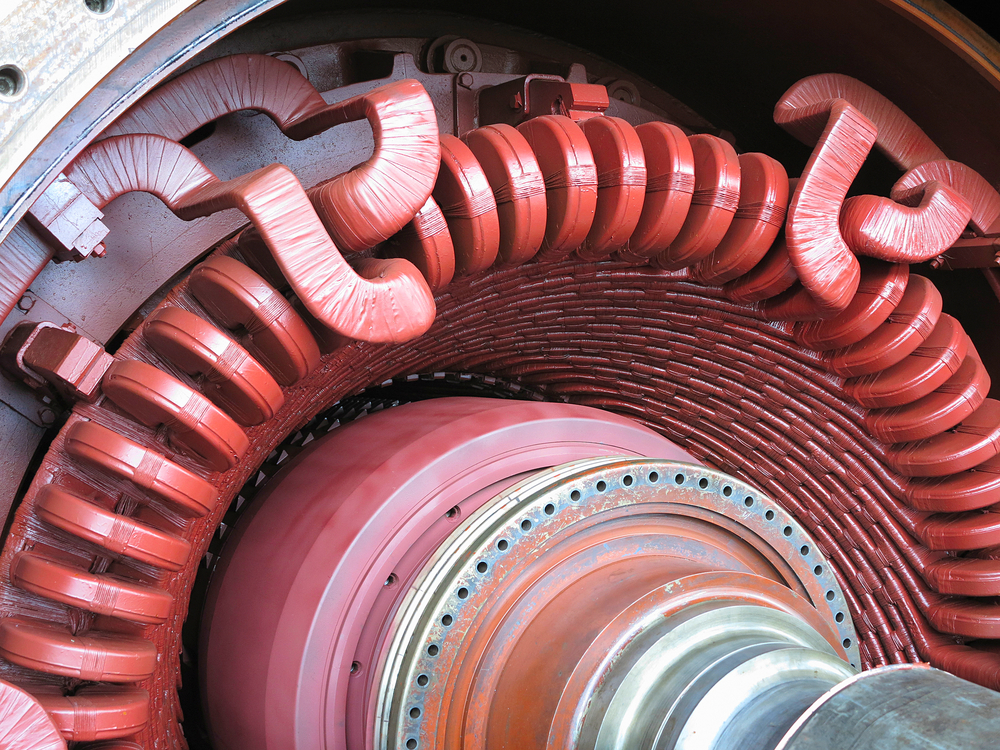
A simple way to define the air gap is to say that it is the air in the space between the stator and the electrical machine's rotor.
Being more specific, we can have similar definitions for alternating current or AC electrical machines and direct current or DC machines.
According to The Electro-mechanical Authority (EASA), in AC machines, the air gap is the air space between the rotor cores and the stator. On the other hand, it is said to be the space between the inter-poles and the armature for a DC machine.
To understand the working principle of the air gap, it is first necessary to remember that both electric motors and generators are rotating electrical machines.
This means that both electric motors and generators have very similar operating principles. The difference is that an electric motor transforms the supplied electrical energy into mechanical energy. In contrast, the electrical generator takes advantage of specific mechanical energy and converts it into electrical energy.
In both cases, the energy transformation process happens when the stator and rotor work together to generate a magnetic flux through the copper windings that each one has. And this is where the air gap comes into play.
A magnetic field is formed in the air gap, and one of the windings mentioned above is responsible for generating the flux that must move through the air gap and cross it two times for each pole that the electrical machine has for each phase.
All these factors lead us to conclude that a small air gap is better. However, a smaller air gap means less separation between the rotor's moving parts and the stator. This is why it is crucial to monitor the air gap in motors and generators since the slightest variation in its uniformity with these characteristics can generate operating problems in the machine.
Monitoring the air gap works very well to determine the condition and dynamic behavior of the machine. Since the air gap is a central part of the motor or generator and is the interface between mechanical and electrical forces, it is straightforward to identify problems by monitoring them.
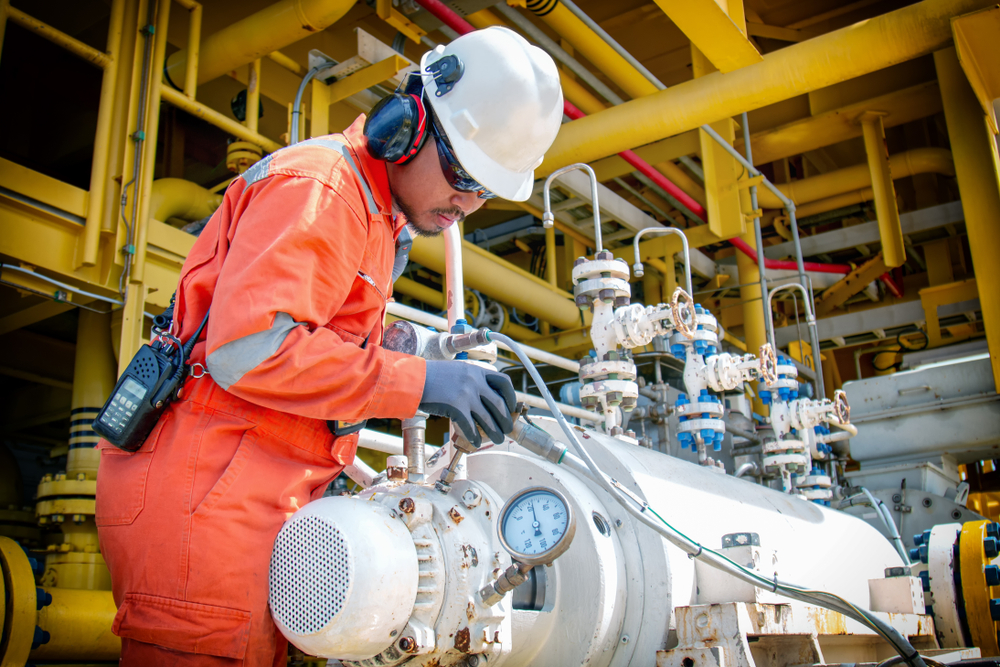
Next, we will see some of the sensors, instruments and equipment used to monitor the air gap in motors and generators:
Systems with capacitive sensors can be installed on the stator to measure the air gap under different operating conditions. These sensors are resistant to extreme environmental conditions and the induction of eddy currents.
Through these systems, different tests such as load rejection tests can be performed, which are carried out to verify the machine's mechanical rigidity and balance during the commissioning tests of new or rebuilt units. This test shows the rigidity of the rotor and stator, the shaft's alignment, and the machine's vibrational behavior.
Other tests include:
Evaluation of the relative thermal expansion of the stator.
Stator collapse of bulb-type generators.
Behavior of the air gap during start and stop.
Using systems with conventional current sensors and other types of meters, such as Rogowski coils, it is possible to measure sideband frequency spectra to determine both mechanical and electrical failures in motors and generators.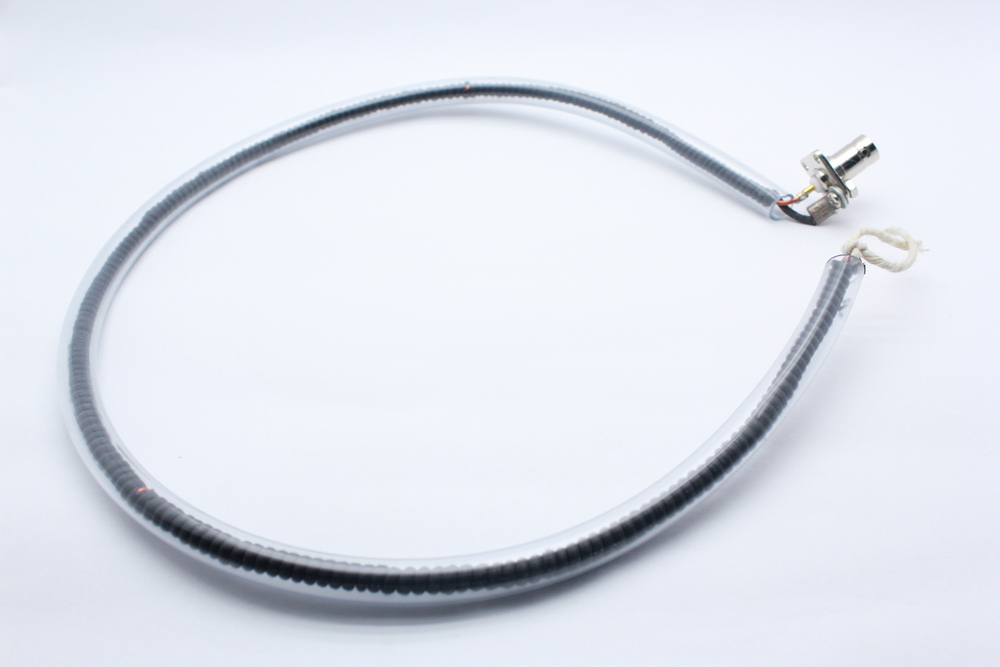
With these systems, it is possible to perform the Current Signature Analysis, also known as CSA. It is possible to detect variations in the air gap that can mean eccentricity problems; in other words, a misalignment of the rotor to the magnetic center of the stator.
These types of systems that use sensors called accelerometers are the most common in vibration analysis. As explained in the article Vibration Analysis of Electric Induction Motors, vibration analysis allows diagnosing electrical problems related to an uneven air gap between rotor and stator.
The following image shows some of the problems detected by the Motor Current Signature Analysis (MCSA), vibration analysis, and other types of analysis both in motors and in the equipment attached to them.
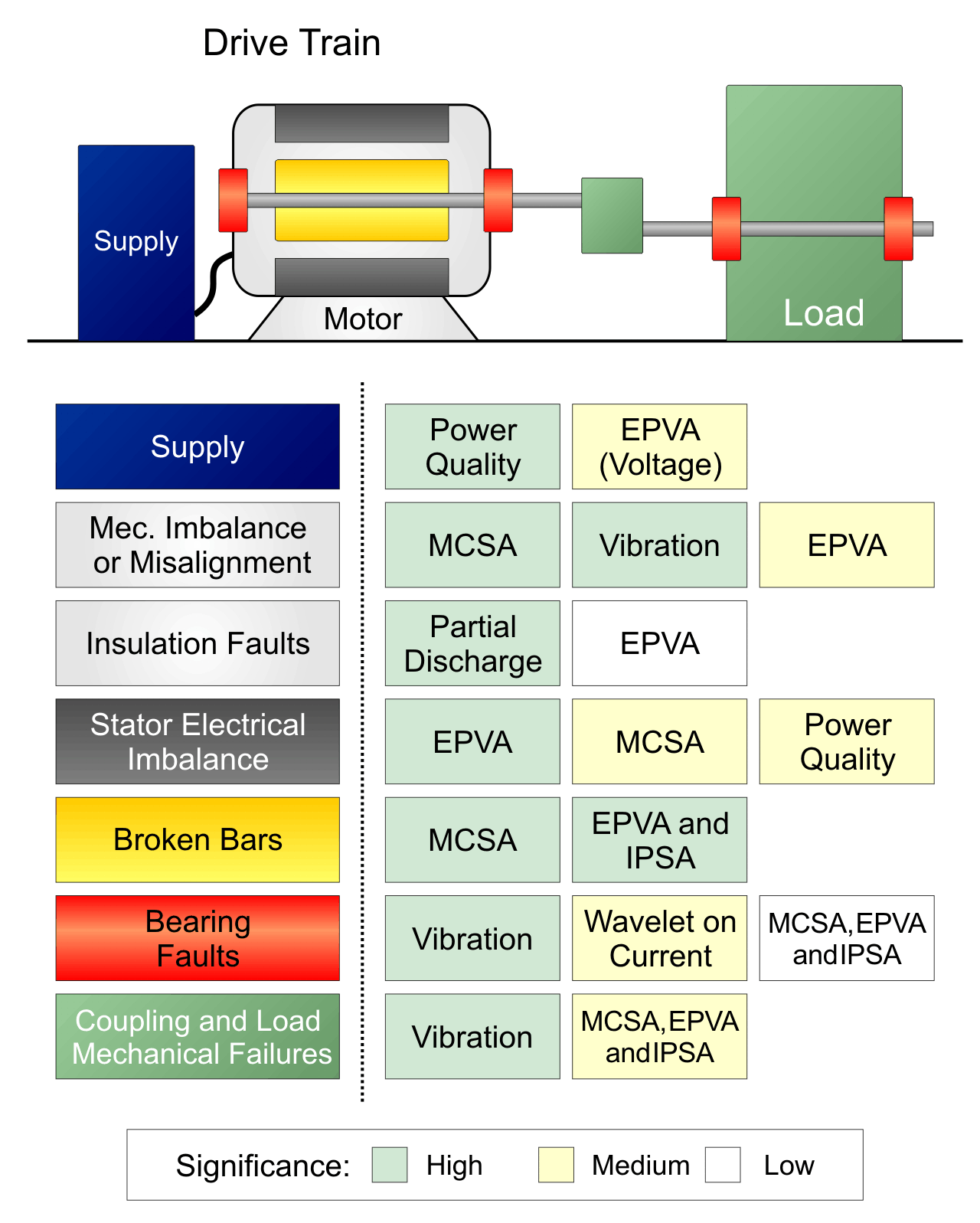
As mentioned above, the monitoring of the air gap in electric motors and generators allows detecting both mechanical problems and electrical problems, among which are: