

Public content served from the new content model and resolved through migrated aliases.
Pumping systems are critical factors in the industrial process; there are different types of pumps to meet the various production needs. Centrifugal pumps are perhaps the most abundant in industrial process applications. Within the classification of industrial pumps, centrifuges are called dynamic pumps and are subdivided into axial flow pumps and radial flow pumps, with one or several stages, horizontal or vertical, with open, semi-open or closed impeller, among other features.
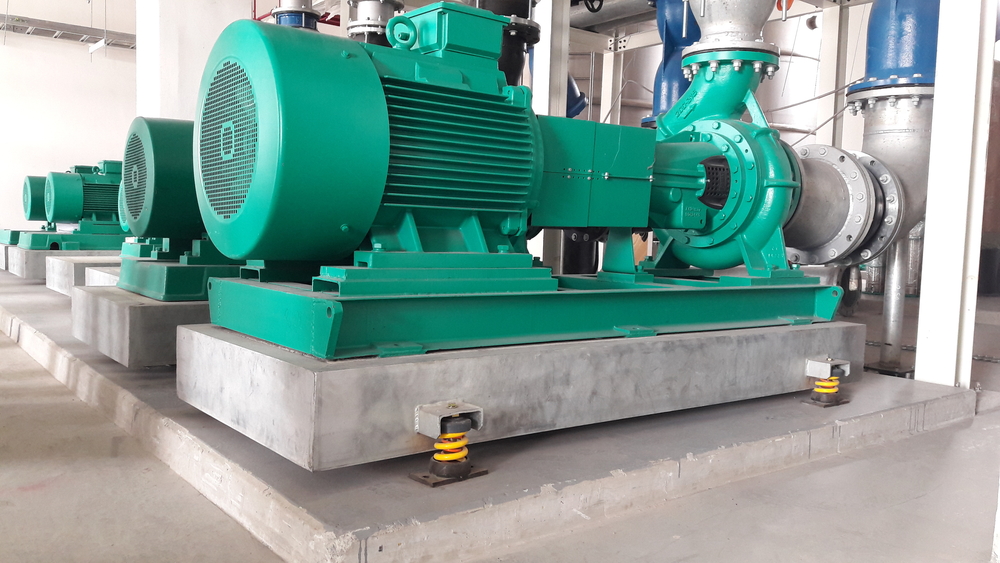
A centrifugal pump is a rotodynamic hydraulic machine that transforms the mechanical energy of the impeller into kinetic or pressure energy by transmitting it to an incompressible fluid. The fluid enters through a suction pipe towards the center of the impeller, which has a series of blades to move the fluid utilizing centrifugal force towards the discharge pipe, passing first through the volute or body of the pump or to other impellers in the case of pumps with more than one stage.
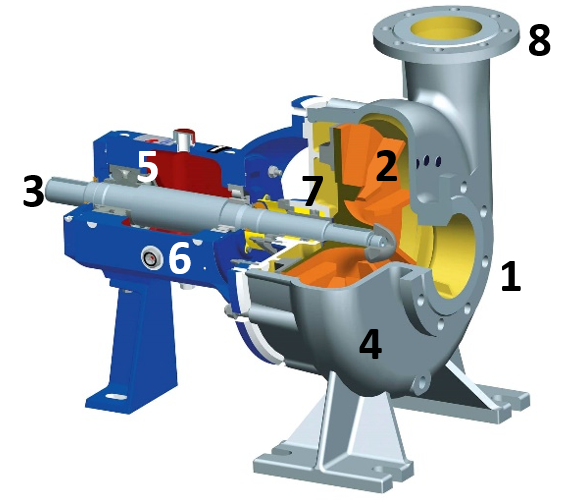
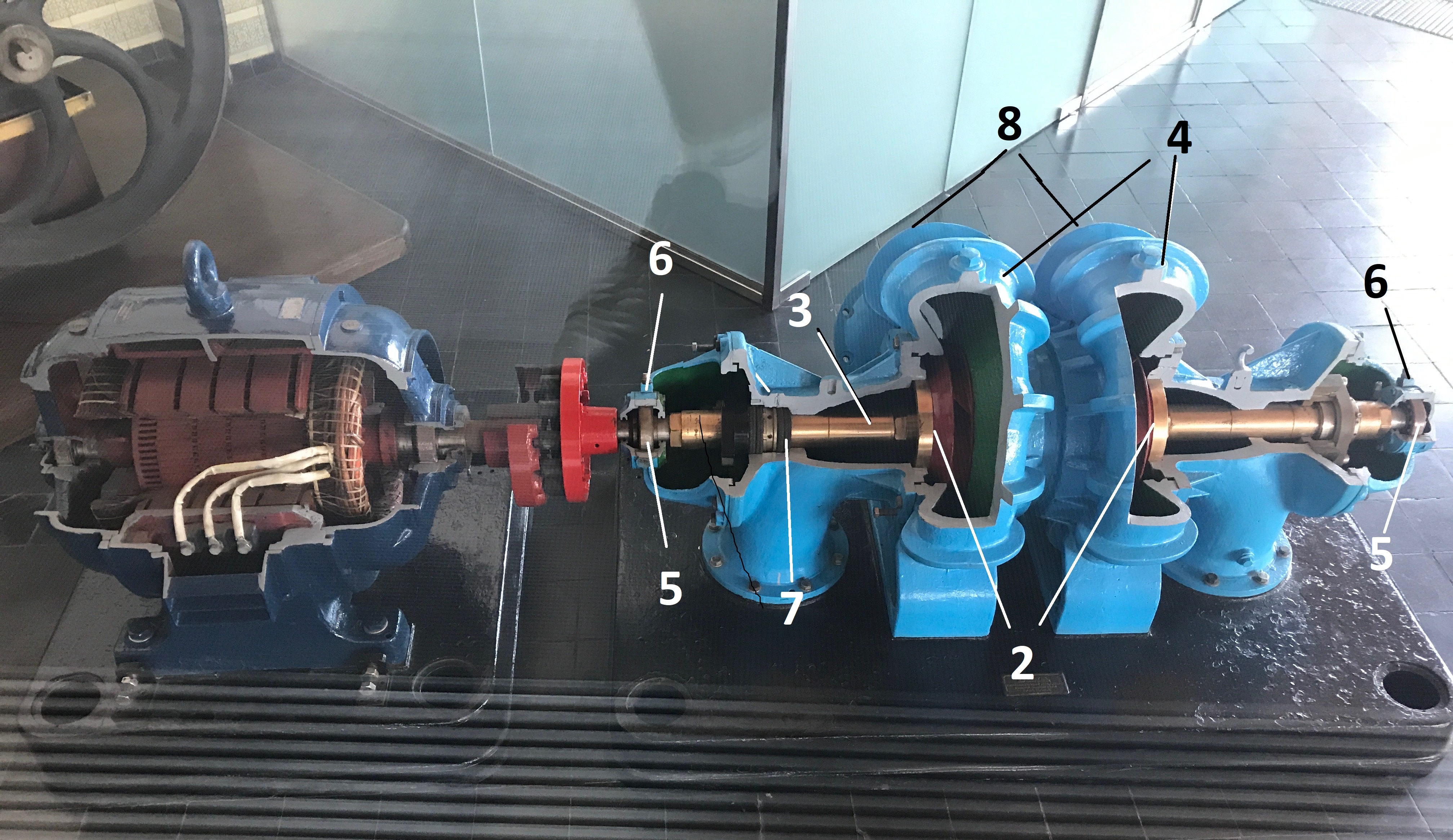
The parts that make up a centrifugal pump are:
As we have already discussed in a general way in our article "Where to place the vibration sensor", in a centrifugal pump, the inspection points for vibrations must correspond to the centerline of the shaft, on the bearing housing. Ensure a stable mounting on a solid part. Whenever possible, make measurements in the horizontal (H), vertical (V) and axial (A) directions of each bearing.
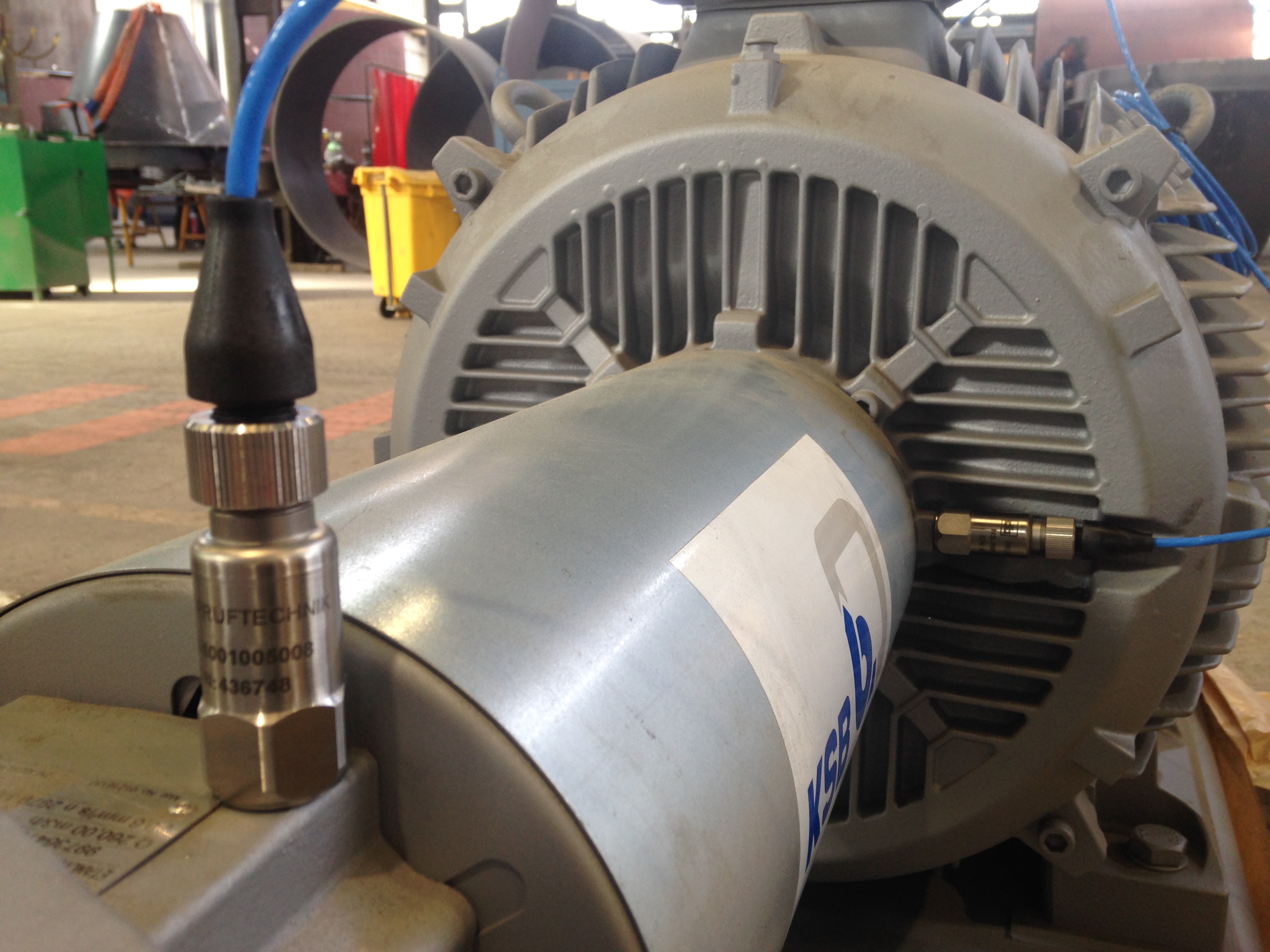
Safety is the priority to select vibration monitoring points. On the coupling side, it should not be measured in the axial direction unless all safety guarantees are available. Some parts of the pump, such as mechanical seals and their pipes, are usually hot, care must be taken not to make contacts with these parts, a cable of the measuring instrument in contact with a hot pipe can burn.
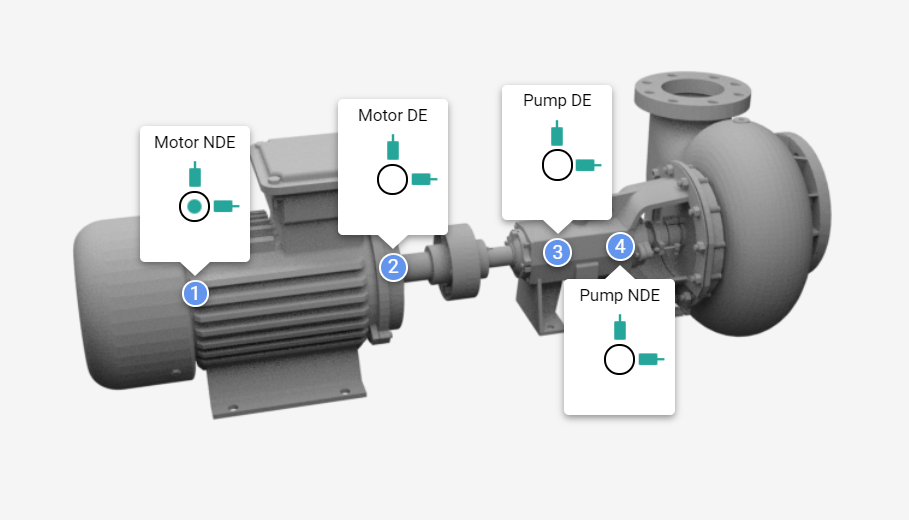
Some analysts take pump bearings at a single measurement point in case of small pumps.
 Imbalance
In centrifugal pumps, imbalance is usually caused by one of the following causes:
When an imbalance is detected in a centrifugal pump, the following actions may be recommended:
 Misalignment
In centrifugal pumps, misalignment is usually caused by one of the following causes:
When a misalignment is detected in a centrifugal pump, the following actions may be recommended:

 Bearing issues
In centrifugal pumps, bearing issues are usually caused by one of the following causes:
When bearing issues are detected in a centrifugal pump, the following actions may be recommended:

 Leaks
LeaksIn most cases, leaks in centrifugal pumps occur in mechanical seals. The causes of the deterioration of the seals can be:
When seal problems are detected in a centrifugal pump, the following actions may be recommended:
 Rotating looseness
In centrifugal pumps, clearances are usually caused by one of the following causes:
When rotating looseness gaps are detected in a centrifugal pump, the following actions may be recommended:
 Structural issues
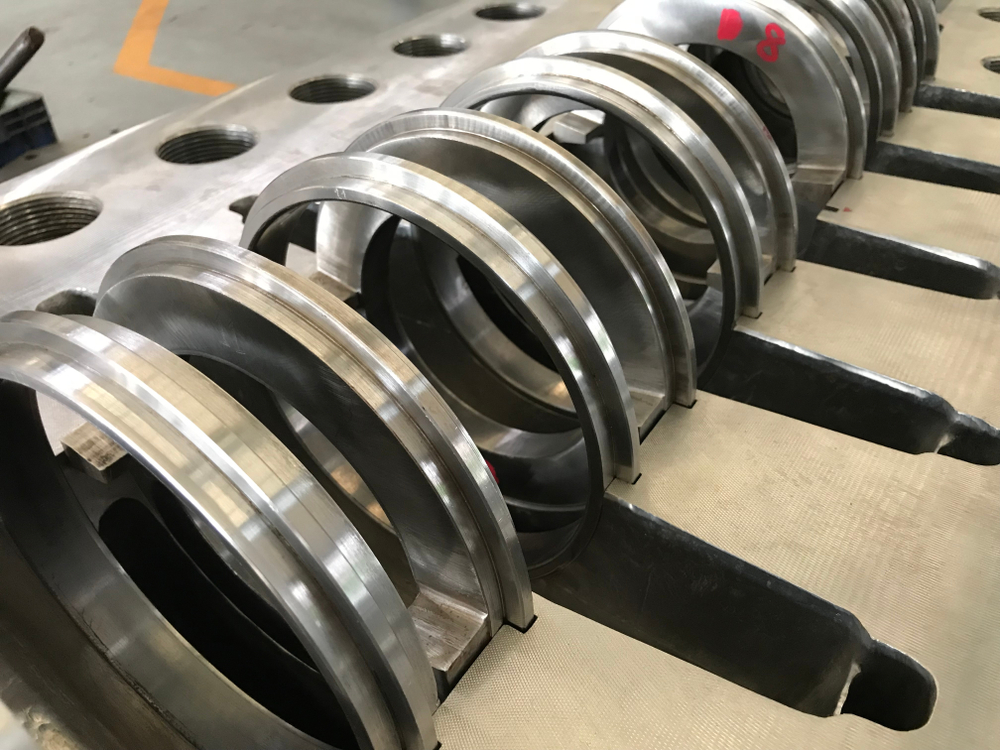
In centrifugal pumps, structural looseness is usually caused by one of the following causes:
When structural looseness is detected in a centrifugal pump, the following actions may be recommended:
 Fluid dynamics issues
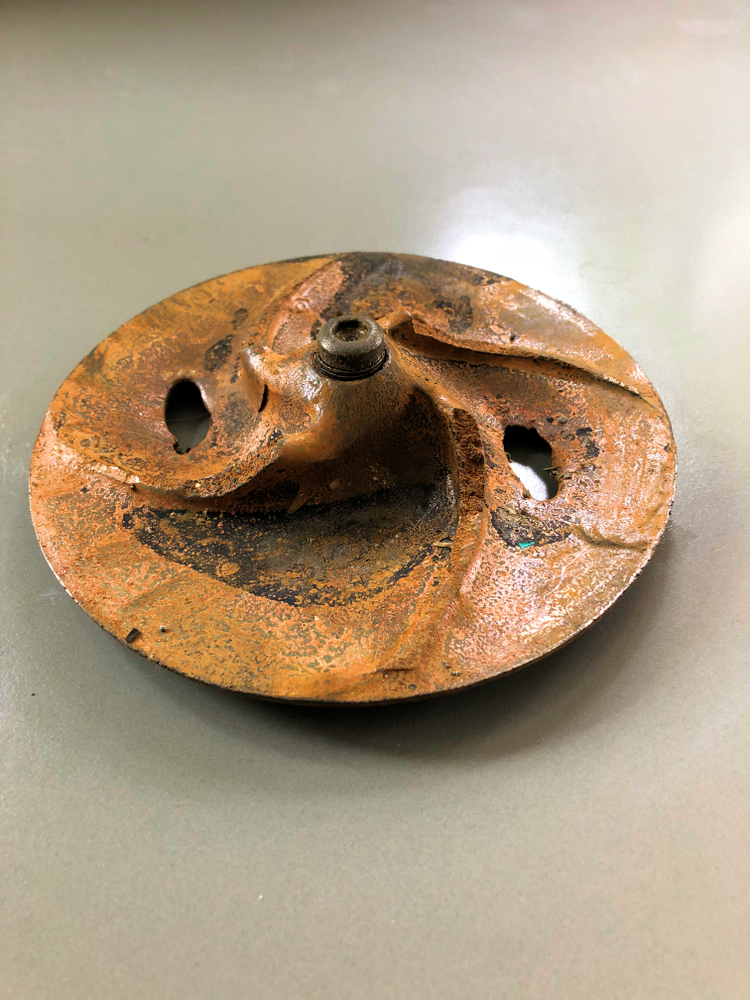
In centrifugal pumps, hydraulic issues are varied and are usually caused by one of the following causes:
When hydraulic issues are detected in a centrifugal pump, the following actions may be recommended:

The inspection of a centrifugal pump must be comprehensive, including dynamic, thermal, and operational behavior. The following technologies also apply to centrifugal pumps:
| Predictive technology | Detectable failures | |
|---|---|---|
 |
Visual inspections | Leaks, cleaning, abnormal noise, loose parts, instrumentation readings. Operational variables, such as performance and efficiency (pressure, flow, amperage, temperature) can be included. |
 |
Thermography | High temperature (mechanical seal or bearings), defective connection. |
 |
Ultrasounds | Bearing issues. |
 |
Oil analysis or tribology | Degradation of the lubricant (grease), water content, contaminants, bearing wear. |
The permissible vibration limits for centrifugal pumps can be found in API 610 standard or ISO 10816-7.