

Public content served from the new content model and resolved through migrated aliases.
In the rapidly advancing industrial landscape, maintenance practices have significantly evolved to enhance operational efficiency, equipment reliability, and cost-effectiveness. One of the most pivotal strategies that have emerged is Condition-Based Maintenance (CBM). CBM leverages real-time data and advanced analytics to predict and prevent equipment failures, marking a shift from traditional maintenance approaches. This article explores the history and evolution of CBM, tracing its roots from the early days of Predictive Maintenance (PdM) and examining when and how the terminology transitioned, particularly in relation to updates in international standards.
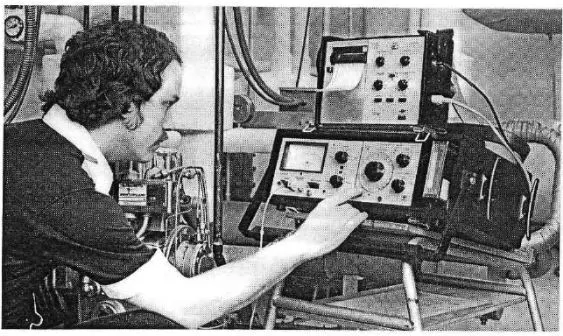
During the initial stages of industrialization, maintenance was predominantly reactive—equipment was repaired or replaced only after a failure occurred. This approach often led to unexpected downtime, increased safety risks, and high repair costs. As machinery became more complex and integral to production processes, the limitations of reactive maintenance became evident.
To mitigate these issues, industries adopted Preventive Maintenance (PM) in the mid-20th century. PM involves performing maintenance activities at predetermined intervals, regardless of the equipment's actual condition. While PM reduced the incidence of catastrophic failures, it was not cost-effective due to unnecessary maintenance actions and did not eliminate unexpected breakdowns caused by unforeseen factors.
The limitations of PM led to the development of Predictive Maintenance (PdM) in the 1960s and 1970s. PdM focuses on monitoring the condition of equipment to predict when maintenance should be performed, thus preventing failures and optimizing maintenance schedules (NASA Office of Safety and Mission Assurance, 2000). This strategy utilized condition-monitoring tools to detect signs of wear or degradation.
Key technologies enabling PdM included:
These technologies allowed for early detection of potential equipment failures, enabling maintenance personnel to intervene before a breakdown occurred.
The 1973 oil crisis prompted industries to seek ways to conserve energy and reduce operational costs. PdM gained prominence as it improved equipment efficiency and extended machinery lifespan. Technological advancements during this period, such as the advent of microprocessors and improved sensor technology, facilitated more precise and reliable condition monitoring.
By the 1980s, the integration of computer technology allowed for better data acquisition and analysis. This era saw the emergence of Computerized Maintenance Management Systems (CMMS), which helped in tracking equipment history, scheduling maintenance, and managing resources effectively.
The transition from the term Predictive Maintenance to Condition-Based Maintenance became more pronounced in the late 1990s and early 2000s. This shift was influenced by several factors, including advancements in technology, changes in maintenance strategies, and significant updates in international standards, particularly those set by the International Organization for Standardization (ISO).
The key standard that formalized this transition is ISO 13306, published in 2001. This standard defines Condition-Based Maintenance as a form of preventive maintenance based on performance and/or parameter monitoring, thereby encompassing predictive maintenance as a subset of CBM. This definition emphasized the proactive nature of CBM, focusing on real-time monitoring and data analysis to inform maintenance decisions.
Other significant standards include:
The shift in terminology from Predictive Maintenance to Condition-Based Maintenance reflects an evolving understanding of maintenance strategies:
The terminology shift was further solidified as industries began to implement maintenance programs in line with the new ISO standards. The emphasis on condition monitoring and diagnostics encouraged organizations to adopt CBM as part of their asset management strategies, leveraging technological advancements to enhance operational efficiency.
Condition-Based Maintenance (CBM) is a proactive maintenance strategy that involves continuous or periodic monitoring of equipment health to perform maintenance only when necessary. By continuously assessing equipment conditions, CBM enables timely interventions, reducing downtime and preventing unexpected failures.
Core elements of CBM include:
CBM aims to optimize maintenance resources by addressing actual equipment needs, thereby improving reliability and reducing unnecessary maintenance activities.
The effectiveness of CBM has been greatly enhanced by several technological advancements:
Despite its benefits, implementing CBM poses several challenges:
International standards have played a crucial role in promoting and standardizing CBM practices.
The publication of ISO 13306:2001 marked a significant moment in formalizing the term Condition-Based Maintenance. By providing standardized definitions and guidelines, ISO facilitated a global shift towards CBM, encouraging industries to adopt the terminology and methodologies outlined in these standards.
Other relevant standards include:
The shift in terminology aligns with advancements in technology and data analytics, allowing for more effective and efficient maintenance practices across various industries. The standards emphasize the proactive nature of CBM, which aims to address potential failures before they occur by continuously assessing equipment conditions.
CBM is expected to evolve further with ongoing technological advancements:
The evolution from Predictive Maintenance to Condition-Based Maintenance marks a significant shift in maintenance philosophy. The change in terminology, particularly following the updates in ISO standards like ISO 13306, reflects a deeper transformation driven by technological advancements and the need for more efficient, data-driven maintenance strategies.
CBM focuses on real-time monitoring and proactive decision-making based on the actual condition of equipment, allowing industries to optimize maintenance activities, reduce costs, and enhance equipment reliability. As industries continue to adopt digital technologies, CBM is poised to become even more integral to maintenance management, paving the way for smarter, more autonomous maintenance systems.
By incorporating detailed research and literature, this article provides a comprehensive overview of the history and evolution of Condition-Based Maintenance. It highlights the shift from Predictive Maintenance, emphasizing the influence of ISO standard updates—particularly ISO 13306:2001—on the terminology and methodologies adopted in modern maintenance practices.
References
ISO. (2001). ISO 13306:2001 Maintenance terminology. International Organization for Standardization.
ISO. (2003a). ISO 17359:2003 Condition monitoring and diagnostics of machines—General guidelines. International Organization for Standardization.
ISO. (2003b). ISO 13374-1:2003 Condition monitoring and diagnostics of machines—Data processing, communication and presentation—Part 1: General guidelines. International Organization for Standardization.
ISO. (2014). ISO 55000:2014 Asset management—Overview, principles and terminology. International Organization for Standardization.
Mobley, R. K. (2002). An introduction to predictive maintenance. Butterworth-Heinemann.
Moubray, J. (1997). Reliability-centered maintenance. Industrial Press Inc.
NASA Office of Safety and Mission Assurance. (2000). Reliability-Centered Maintenance Guide for Facilities and Collateral Equipment. NASA.
Ahmad, R., & Kamaruddin, S. (2012). An overview of time-based and condition-based maintenance in industrial application. Computers & Industrial Engineering, 63(1), 135–149.
Fiorentino, M., Uva, A. E., Gattullo, M., Debernardis, S., & Monno, G. (2014). Augmented reality on large screen for interactive maintenance instructions. Computers in Industry, 65(2), 270–278.